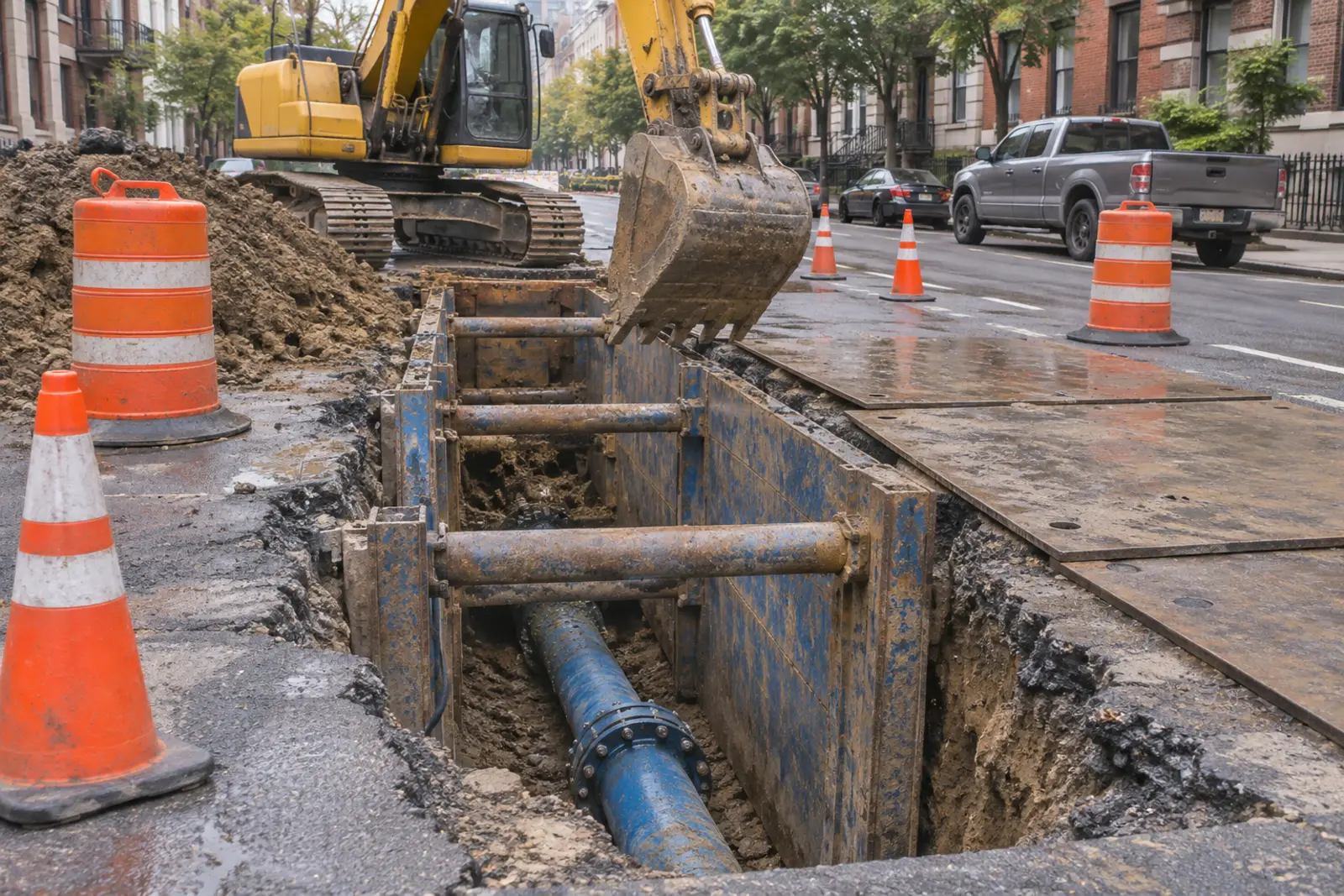
Cutting a street for a water, sewer or service line looks simple on paper. These seven gaps account for most of the comments we see.
A utility cut permit covers work that opens the street, sidewalk or shoulder to install or repair a line: a water service, a sewer lateral, a gas or telecom line, a storm drain connection. The work itself is routine. The permit often is not, because reviewers are protecting a street the public paid for. Here are the seven reasons we see most often for a package to come back.
1. The wrong agency, or only one of two
If the street is state-maintained, NCDOT needs an encroachment agreement before the city acts. Filing only with the city, or only with the state, is the fastest way to lose a month.
2. No existing utilities shown
Reviewers want to see what is already in the ground near your cut: water, sewer, storm, gas, power and telecom. A plan that shows only the new line suggests nobody checked for conflicts. Show the 811 locate ticket and the existing lines from record drawings or a survey.
3. Missing or generic traffic control
Any cut in a travel lane, parking lane or sidewalk needs a traffic control plan for that street. A generic sheet with no street name, speed or lane widths is one of the most common comments.
4. Restoration not to the jurisdiction's standard
Each jurisdiction has a pavement cut and restoration standard: trench backfill and compaction, base thickness, asphalt or concrete depth, saw-cut limits and sometimes a full-lane mill and overlay. Many require more restoration on recently paved streets. Reference the right detail and show the restoration limits on the plan.
Most utility comments are not about the pipe. They are about the street you leave behind.
5. Location and dimensions unclear
The plan must show where the cut is, how big it is, how deep it goes and how far it is from the curb, the property line and other utilities. A sketch on an aerial photo without dimensions is usually returned.
6. Bonds, insurance and contractor information
Many agencies require a right-of-way bond or a deposit, proof of insurance naming the agency, and the licensed contractor who will do the work. Missing any one of them stops the permit at intake, before a reviewer has even read the plan.
7. No inspection or schedule information
Reviewers want to know when the work will happen, how long the street will be open and who to call. Some streets have work-hour limits or moratoriums on cutting after repaving. A schedule that ignores them comes back.
Before you file
Run your package against these seven points. Confirm the maintaining agency, show existing utilities, attach a traffic control plan drawn for the street, reference the restoration standard, dimension the cut, include the bond and insurance, and state the schedule. That covers most of what a reviewer will ask.
Sample post